

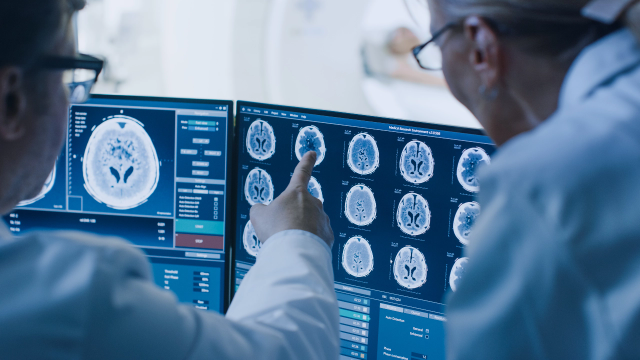
Every new treatment for Alzheimer’s disease, Parkinson’s disease, multiple sclerosis and other neurological conditions starts with one thing: people who choose to take part in research.
Clinical trials are often associated with testing new medicines, but they are about much more than that. They help researchers understand how neurological conditions develop, identify earlier signs of disease, improve diagnosis and determine whether new treatments, technologies or approaches to care genuinely make a difference.
Despite this, many people are unsure what taking part actually involves. Some assume clinical trials are only suitable for people with a diagnosis, while others worry they will be treated as “guinea pigs” or face significant costs. These misconceptions prevent many people from considering research that could benefit future generations while helping scientists answer important questions today.
Whether you’re living with a neurological condition, have a family history of dementia, or simply want to contribute to medical research, understanding how clinical trials work can help you decide whether taking part is right for you.
Why neurological clinical trials are so important
Neurological conditions remain one of the biggest health challenges facing the UK.
Around one in six people lives with a neurological condition, making neurological disorders one of the leading causes of disability worldwide. At the same time, dementia affects almost one million people across the UK, with numbers expected to rise as the population ages.
Developing better treatments isn’t straightforward. Unlike many other areas of medicine, the brain is incredibly complex. Researchers need years of carefully collected evidence before they can determine whether a new treatment is safe and effective.
Clinical trials provide that evidence.
They help researchers answer questions such as:
- Can a treatment slow the progression of Alzheimer’s disease?
- Does a new diagnostic test identify disease earlier?
- Can digital technologies improve monitoring outside of hospitals?
- Which treatments provide the greatest benefit while minimising side effects?
- How can quality of life be improved for people living with neurological conditions?
Without volunteers, these questions simply cannot be answered.
Research funded through organisations including the National Institute for Health and Care Research (NIHR) has contributed to major advances in neurological care, from improved imaging techniques to new medicines and better methods of diagnosing dementia earlier.
Clinical trials are about more than testing new medicines
One of the biggest misconceptions is that every clinical trial involves taking an experimental drug.
In reality, neurological research covers a wide range of studies.
Some focus on medications, but others investigate:
Earlier diagnosis
Earlier diagnosis gives people more time to plan their future and may allow treatment to begin sooner.
Researchers are exploring new brain imaging techniques, blood biomarkers, cognitive assessments and digital technologies that may detect neurological diseases before symptoms become severe.
Improving patient care
Not every breakthrough comes from a laboratory.
Some studies look at ways to improve rehabilitation, memory support, communication with healthcare professionals or everyday quality of life for people living with neurological conditions.
Digital health technologies
Wearable devices, smartphone apps and remote monitoring technologies are becoming increasingly important within neurological research.
These tools can provide researchers with a more accurate picture of how symptoms change in everyday life rather than relying solely on occasional clinic visits.
Prevention research
Researchers are also investigating factors that may reduce the risk of developing neurological diseases.
Studies continue to examine the role of physical activity, cardiovascular health, sleep, nutrition, genetics and lifestyle to better understand how brain health changes over time.
Who can take part in a neurological clinical trial?
Many people are surprised to learn that clinical research often needs participants from a wide variety of backgrounds.
Depending on the study, researchers may be looking for:
- people diagnosed with dementia
- individuals with mild memory concerns
- people living with Parkinson’s disease
- healthy volunteers
- carers and family members
- adults with no neurological symptoms
- people with specific genetic risk factors
Each study has its own eligibility criteria designed to answer a particular research question. Before anyone joins a study, researchers carefully assess whether participation is appropriate.
This means not everyone who expresses an interest will be eligible, but every enquiry helps researchers understand who may be suitable for future studies.
Is taking part safe?
Clinical research in the UK operates within strict ethical and regulatory frameworks designed to protect participants.
Before a neurological clinical trial begins, it must undergo independent ethical review and receive the necessary regulatory approvals. Researchers must demonstrate that participant welfare remains the highest priority throughout the study.
Before deciding whether to participate, individuals receive detailed information explaining:
- why the study is being carried out
- what participation involves
- potential risks and benefits
- how personal information will be protected
- the right to withdraw at any time without affecting future healthcare
Participants are encouraged to ask questions before giving informed consent, helping them make a decision based on clear, balanced information.
What are the benefits of taking part?
Many people choose to participate because they want to contribute to future healthcare rather than expecting direct personal benefit.
Taking part in research can:
- help improve treatments for future patients
- contribute to earlier diagnosis of neurological diseases
- support scientific understanding of brain health
- give researchers access to more representative data
- benefit from being screened using some of the latest diagnostic tools and technologies, even though this is not the same as a full health check
- help shape future standards of care
Some participants also value the opportunity to learn more about their own health while working closely with experienced clinical research teams, although this varies between studies.
Does it cost anything to take part?
One concern people often have is whether clinical trials involve paying to participate.
In most cases, there is no cost to volunteers for taking part in approved clinical research. Depending on the study, reasonable travel expenses or other costs may also be reimbursed.
The exact arrangements differ between studies, so participants receive clear information before deciding whether to join.
To put it simply, none of Dementech’s clinical trials are costly to join. They are all free to take part in, so no one is ever asked to pay to be involved in our research.
Why every volunteer makes a difference
Clinical research doesn’t advance because of one breakthrough or one researcher.
Progress happens because thousands of people choose to contribute their time, experiences and data to answer questions that benefit future patients.
Every participant helps researchers build a clearer picture of neurological disease. Even studies that don’t produce the expected outcome provide valuable evidence that guides future research and prevents resources being spent pursuing ineffective approaches.
This collective contribution has helped improve diagnosis, expand treatment options and deepen our understanding of how neurological conditions develop.
How to get involved in neurological research
If you’re interested in contributing to neurological research, the first step is simply finding out which studies may be suitable for you.
Each clinical trial has different eligibility criteria, timescales and commitments, so it’s important to speak with an experienced research team who can explain what participation involves and answer any questions.
At Dementech, our team supports people throughout every stage of the research journey, from initial enquiries through to study completion. Whether you’re living with a neurological condition or are interested in contributing as a volunteer, we can help you understand the opportunities currently available.
While much of our work centres on neurological conditions, Dementech also supports research in other specialist areas, including cardiology and ophthalmology. This spans a growing range of conditions, from pericarditis and heart failure through to narcolepsy, so it’s always worth asking our team what studies are currently available across these areas too.
You don’t need a diagnosis to take part, either. We’re also building a database of healthy volunteers who simply want to contribute to research, and you can register your interest through our sign-up form to be considered for suitable studies in the future.
Ready to learn more?
Visit our Clinical Trials page to see current opportunities or contact our team to discuss whether taking part in neurological research could be right for you.
Frequently Asked Questions
Are neurological clinical trials only for people with dementia?
No. Some studies recruit people with diagnosed neurological conditions, while others require healthy volunteers or people with mild symptoms.
Can I leave a clinical trial after joining?
Yes. Participation is entirely voluntary, and you can withdraw from a study at any time without it affecting your usual medical care.
Are neurological clinical trials free?
Yes. Approved clinical trials do not require participants to pay to take part, and some studies reimburse reasonable travel expenses.
Why do healthy volunteers matter?
Healthy volunteers provide important comparison data that helps researchers understand how neurological diseases develop and whether new diagnostic tools or treatments are effective.
If you’d like further support or information, charities such as the British Heart Foundation, Narcolepsy UK and Parkinson’s UK offer helpful guidance and support for people living with these conditions, as well as their families and carers.
References
- Alzheimer’s Society. Dementia UK: Update.
- NHS England. Research in the NHS.
- National Institute for Health and Care Research (NIHR). Be Part of Research.
- Health Research Authority. What to expect if you take part in research.
- UK Clinical Research Collaboration. Clinical research in the UK.