

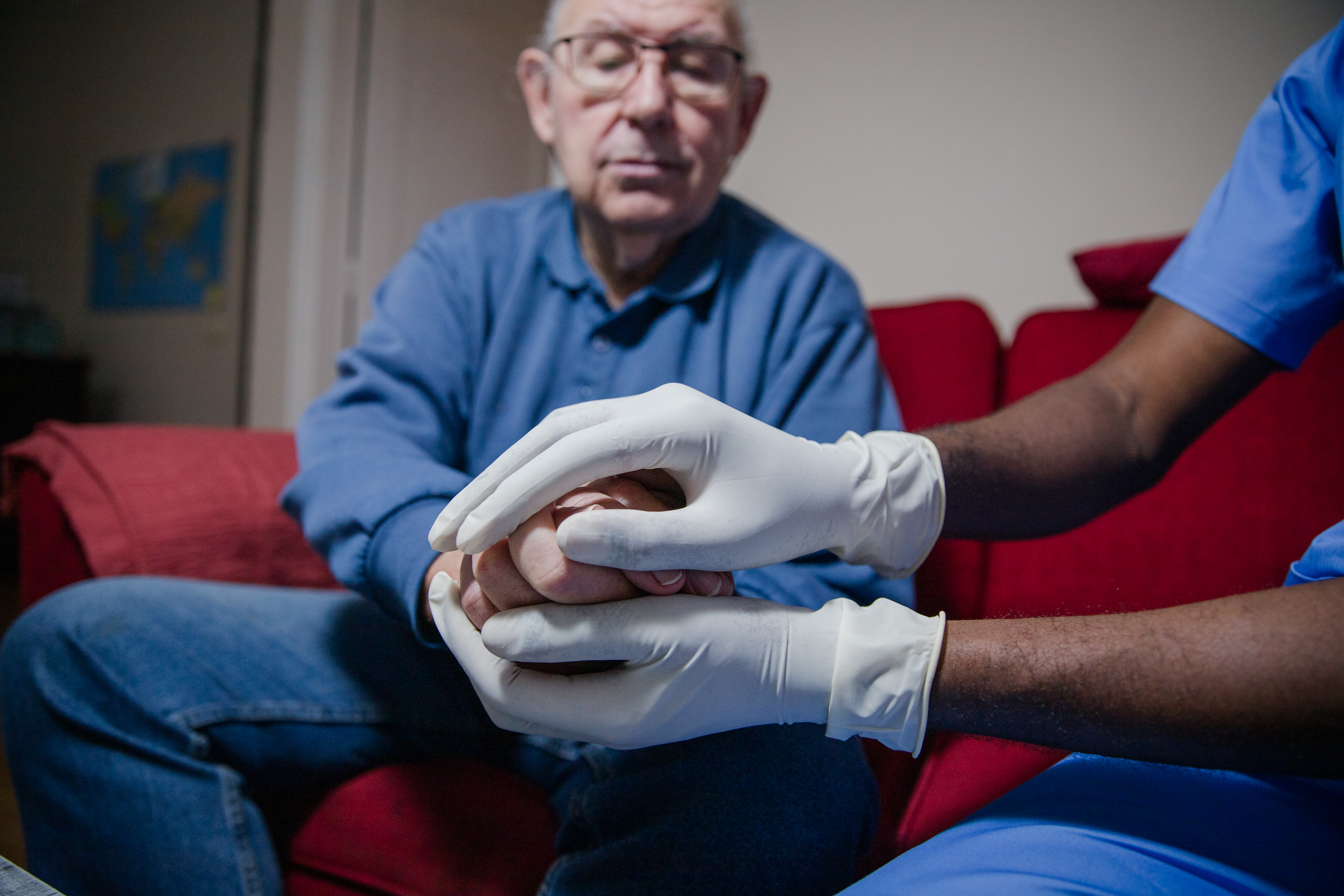
A hand tremor is one of those symptoms that can quickly cause concern, especially when Parkinson’s disease is the first condition that comes to mind. However, tremors are not specific to Parkinson’s, and in fact, the most common cause of long-term shaking in adults is a condition called essential tremor.
Although both conditions can look similar from the outside, they behave very differently within the nervous system. Understanding those differences is often the first step in reducing uncertainty and deciding whether a neurological assessment is needed.
This guide explains how Parkinson’s disease and essential tremor differ in everyday presentation, what actually causes each condition, and how clinicians distinguish between them in practice.
What happens in Parkinson’s disease and essential tremor?
Parkinson’s disease is a neurodegenerative condition that affects movement control due to a gradual reduction in dopamine-producing cells in a part of the brain called the substantia nigra. Dopamine plays a key role in smooth, coordinated movement, so when levels drop, signals between the brain and muscles become less precise.
This disruption does not only cause tremor. It also affects speed of movement, muscle tone, posture and automatic movements such as facial expression or arm swing.
Essential tremor, on the other hand, is not caused by dopamine loss and is not considered a degenerative condition in the same way. It is linked to abnormal communication within brain circuits involved in movement control, particularly those involving the cerebellum. The result is a rhythmic shaking that is most noticeable during action or when maintaining a posture.
Although both conditions involve involuntary movement, the underlying mechanisms are different, which is why the tremor patterns and associated symptoms differ so clearly once assessed properly.
Why Parkinson’s disease and essential tremor are often confused
Confusion usually begins with appearance rather than medical complexity. From a patient’s perspective, both conditions can present as a visible hand tremor that gradually becomes more noticeable over time. That similarity is often enough to raise concern.
The overlap becomes more understandable when considering that both conditions:
- Commonly affect the hands first
- Can begin subtly and progress slowly
- Become more noticeable under stress or fatigue
- Are more common in older adults
However, once a neurologist observes how the tremor behaves in different situations, the differences usually become clearer. The key distinction is not just the presence of shaking, but the context in which it appears.
Parkinson’s disease vs essential tremor: key clinical differences
One of the most useful ways to separate the two conditions is by observing patterns rather than isolated symptoms.
| Feature | Parkinson’s disease | Essential tremor |
| Tremor timing | Occurs mainly at rest | Occurs during movement or posture |
| Initial presentation | Often one-sided | Usually both sides |
| Other symptoms | Slowness, stiffness, balance changes | Tremor often isolated |
| Progression | Gradual but multi-symptom | Often slow and tremor-focused |
| Head or voice tremor | Uncommon | Relatively common |
| Handwriting changes | Small, cramped writing | Shaky but normal-sized writing |
| Family history | Less common | Frequently present |
The most important diagnostic clue in clinical practice is whether the tremor disappears when the hands are in use or whether it becomes more pronounced during movement.
What a tremor actually feels like in daily life
Patients often describe tremors in very different ways depending on the underlying cause.
In Parkinson’s disease, the tremor is often noticed when the hands are at rest, such as sitting watching television or resting the hands on a lap. It may be subtle at first, sometimes described as a gentle rolling or pill-rolling movement in the fingers. Importantly, it often reduces when the person starts doing something with the hand.
Over time, people may notice that the tremor is only one part of a broader change. Tasks can feel slower, movements less automatic, and everyday actions such as turning in bed or getting up from a chair may take more effort.
In essential tremor, the experience is usually different. The shaking becomes more obvious when trying to perform tasks that require control or precision. Holding a cup, using cutlery, applying makeup or writing can all bring out the tremor. Some people find that the shaking improves when the hands are fully supported or at rest.
Unlike Parkinson’s, essential tremor is often the main symptom rather than one part of a wider movement disorder.
Symptoms beyond tremor that help with diagnosis
Tremor alone is rarely enough to confirm a diagnosis. Neurologists place significant weight on additional symptoms.
In Parkinson’s disease, early signs may include stiffness in one arm or shoulder, reduced arm swing while walking, subtle changes in posture, or a sense that movement has become less fluid. Some people notice their handwriting becoming smaller or their voice becoming softer without realising why.
These changes occur because Parkinson’s affects multiple motor systems, not just tremor pathways.
Essential tremor does not typically cause stiffness, slowness of movement or balance problems in the same way. The condition is largely confined to rhythmic shaking, although it can still have a meaningful impact on daily tasks depending on severity.
How neurologists distinguish between the two conditions
Diagnosis is primarily clinical, meaning it relies on examination and observation rather than a single test.
A neurologist will often begin by observing movement patterns during normal interaction. Simple details such as how a person walks into the room, how they sit down, or whether their facial expressions appear symmetrical can provide useful early clues.
The physical examination may include asking the patient to:
- Hold their arms outstretched
- Perform finger-to-thumb movements
- Write a sentence
- Draw a spiral
- Walk a short distance
- Stand from a seated position
These tasks help assess tremor behaviour, coordination, muscle tone and movement speed.
In uncertain cases, a DaTscan may be used to assess dopamine activity in the brain. While it does not diagnose Parkinson’s disease on its own, it can help differentiate Parkinsonian syndromes from essential tremor in selected cases where clinical signs are unclear.
According to NHS guidance on Parkinson’s disease, diagnosis is typically made by a specialist based on symptoms and examination, with imaging used only where necessary.
When a tremor should be assessed by a specialist
Not all tremors indicate a neurological condition, but assessment is recommended when:
- The tremor is persistent or worsening
- It affects one side of the body more than the other
- There are additional symptoms such as stiffness or slowness
- Daily tasks are becoming more difficult
- The cause is unclear or causing concern
Early assessment is not only about diagnosis but also about ruling out other causes such as medication effects, thyroid issues or anxiety-related tremor.
Treatment approaches and how they differ
Treatment depends entirely on the underlying condition.
Parkinson’s disease is usually managed with medication that helps restore dopamine function in the brain. This may include levodopa-based treatments and other dopamine agonists. Alongside medication, physiotherapy, occupational therapy and speech therapy often play an important role in maintaining independence and mobility.
In more advanced cases, surgical options such as deep brain stimulation may be considered.
Essential tremor is managed differently because dopamine pathways are not involved. Treatment may include medications such as propranolol or primidone, along with practical strategies to reduce the impact of tremor on daily life. Some individuals do not require treatment if symptoms are mild.
In both conditions, lifestyle adjustments and supportive therapies can significantly improve quality of life.
Living with uncertainty before diagnosis
One of the most difficult aspects of tremor-related symptoms is not knowing the cause. Many people spend months or years wondering whether the changes they are experiencing are signs of Parkinson’s disease.
However, tremor alone is rarely enough to draw conclusions. The pattern of symptoms over time is often far more informative than any single episode of shaking.
A specialist assessment provides clarity not only through diagnosis but also by ruling out conditions that do not fit the overall pattern. For many people, that reassurance is just as valuable as treatment.
How Dementech supports patients with tremor symptoms
At Dementech, neurological assessment focuses on understanding the full picture of symptoms rather than isolating a single sign. This includes how movement changes over time, how symptoms affect daily life and whether there are subtle neurological changes that may not be immediately obvious.
Where appropriate, further investigations or specialist referral may be recommended to ensure an accurate diagnosis and appropriate management plan.
Patients can access support through: